
This Waterdrop reverse osmosis system review covers the G5P500A. It is a tankless under-sink unit for drinking water, with an added mineral stage. It is worth a look if you want to keep a storage tank out of the cupboard. The main trade-off is the installed setup: check where its faucet will go and how the water tubes will connect.

Waterdrop G5P500AWaterdrop G5P500A
Our verdict:
Tankless with mineral stage
A tankless drinking-water layout with an added mineral stage.
View on Amazon- Tankless under-sink layout
- Maker-stated 500 GPD production
- Maker-stated 2:1 product-to-drain ratio
Keep in mind: Confirm the supplied faucet's mounting hole and all feed, drain and power needs.
How We Picked the Waterdrop G5P500A
We used the exact G5P500A listing record and the maker's US product page. This is a review of published data. We have not installed or tested the unit. Other Waterdrop models can have different filters, output figures and faucet needs. Their names are not a reason to share one set of specs.
The maker describes eight stages, a tankless layout, a mineral stage, 500 gallons per day and a 2:1 pure-to-drain ratio. These are stated model figures. They do not tell us the water flow or result in your home. The inlet water and working conditions still matter.
| Published feature | What it helps you assess | What it does not prove |
|---|---|---|
| Tankless layout | The cupboard layout without a storage tank | That any cupboard will fit the unit |
| 500 GPD | Stated daily membrane production | Instant delivery of that volume at a faucet |
| 2:1 pure-to-drain ratio | The stated split between product water and drain water | A fixed ratio under every feed condition |
| Added mineral stage | Whether you want minerals added after RO | A health benefit or a complete water test |
Scroll for more →
Check the Waterdrop reverse osmosis system installation first
Measure the cupboard with doors shut and items in their normal places. Keep access for filter changes. A unit that fits once is not much use if its filters cannot be removed. Include bends in the tubes, the shutoff and the drain connection in your layout.
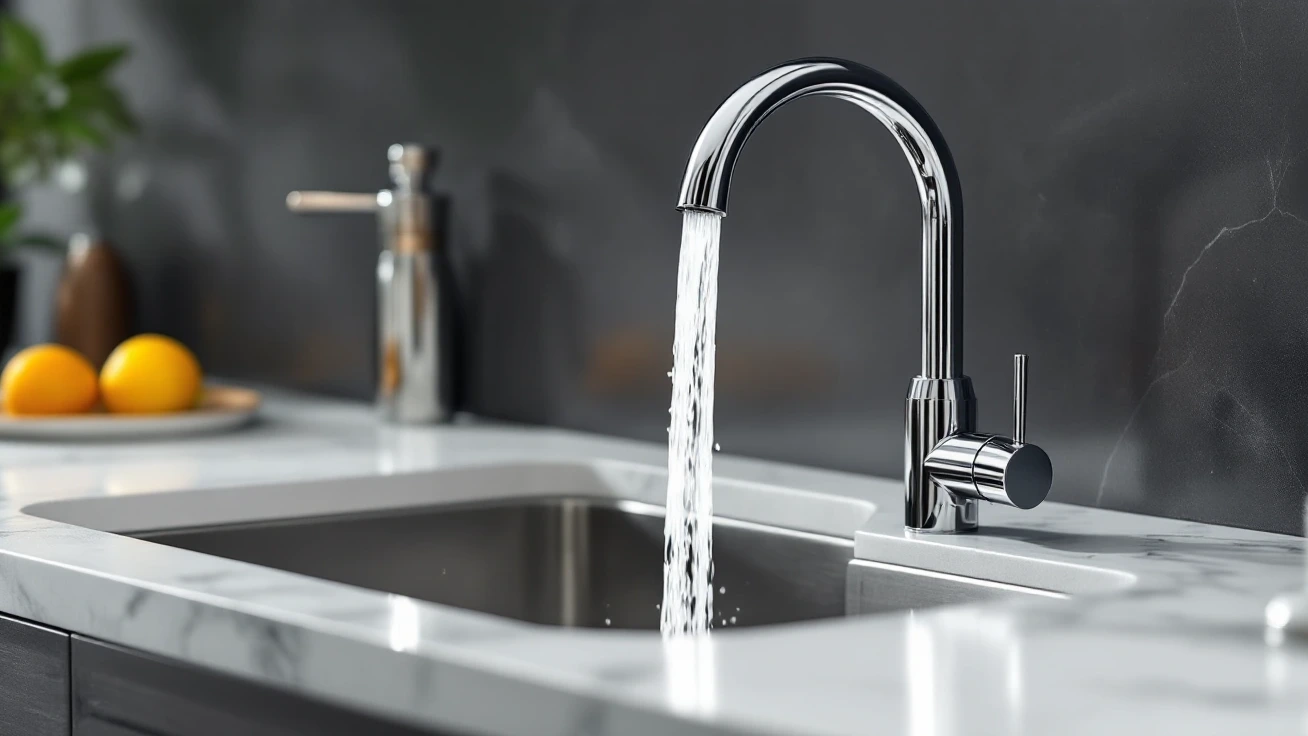
Check the exact faucet and its fixing needs. The listing notes a countertop hole for the supplied faucet. An existing spare hole may help, but its size and position must suit this faucet. Do not order on the basis that every kitchen sink has a spare suitable opening. Read the current manual before any drilling.
Follow the unit's stated feed, power and drain needs. This article is not a plumbing or wiring guide. A tidy cupboard does not show that the water or connections meet the model's limits. Use the RO installation guide to plan what to check and what work the quoted install includes.
Read 500 GPD as production, not tap flow
Gallons per day describes volume produced over time. It is not the same measure as gallons per minute at the outlet. A tankless design also has no separate storage tank from which to draw a stored batch. Judge it by the way you fill a glass or pot, rather than by the largest daily number alone.
Ask for the stated test conditions and delivery data for this exact model. Feed pressure, temperature and water chemistry can affect an RO setup. Do not copy an output figure from a larger Waterdrop model. If you need several pots filled in quick succession, make that task part of your comparison.
The RO mechanism guide explains the membrane and drain path. The G5P500A treats the drinking-water route; it is not a whole-house filter or a softener for every tap. Keep shower flow and laundry hardness out of its performance brief.
Drain water and the mineral stage
The maker's 2:1 figure means two volumes of product water for one sent to drain under the stated conditions. It does not mean there is no wastewater. Check how the drain tube is connected and how the manual handles flushing. Include the whole operating cycle when assessing water use.
The G5P500A adds a mineral stage after the RO process. Choose that feature because it matches your preference for the finished water. We make no claim that it improves health. A lower or higher total dissolved solids reading, often called TDS, does not identify each substance in the water.
The maker lists NSF/ANSI 58 and 372 on its US page. Those names describe different scopes. Standard 372 concerns lead content in wetted materials; it is not a lead-removal claim. Before relying on a specific reduction, check the exact model and claim in the current certification listing and performance sheet. We do not infer every reduction from a logo.
Pros, limits and filter ownership
The tankless layout is the clear reason to shortlist this model. Its published drain ratio gives you a specific figure to compare, and the mineral stage is an explicit feature. These points help define a choice. None establishes that it will treat every finding on a private well report.
The fitting work is the main limit. A renter who cannot add the faucet or drain connection may need a different format. Filter access and the supply of exact replacement parts also remain ongoing tasks. Write down the cartridge codes from the current manual, rather than relying on a picture of a similar unit.
There is no fixed ownership-cost figure here. Add the correct filters, any installation work and the water sent to drain to your comparison. Use the filter replacement guide for a record of parts and dates. Follow the model's service rules, including any required flushing or cleaning.
For the wider choice of treatment formats, use the best reverse osmosis system guide. Match the required result before narrowing the equipment.
Frequently asked questions
Does G5P500A filter all water in the house?
No. This is an under-sink drinking-water system with its own outlet. It does not treat the water used for showers or laundry. Define which tap needs RO and why. A whole-house hardness or sediment problem needs its own treatment assessment, even if the drinking-water unit is part of the plan.
Is 500 GPD the flow from the faucet?
No. GPD is a daily production measure. It does not state the instantaneous faucet flow in gallons per minute. Look for the delivery data and test conditions for G5P500A. Compare those with how you fill glasses and pots; do not treat a nominal daily total as an instant reserve.
Does the mineral stage make the water healthier?
We make no such claim. The added stage is a product feature to assess against your preference for the finished water. A mineral claim or a TDS reading is not a full water analysis. For a named concern, use the exact supported reduction claim and the conditions that apply to it.
Is a tankless system easier to install?
It removes the separate storage-tank placement task, but that does not make every installation simple. You still need the correct faucet and power supply. Check the feed and drain connections too. Measure space for service as well as the unit itself. Read the complete manual before changing the sink or worktop.
Verdict on this Waterdrop reverse osmosis system
This Waterdrop reverse osmosis system suits a tankless drinking-water setup with a mineral stage, if you can meet its install needs. Skip a purchase based on GPD alone. Confirm the faucet layout and exact filter parts first. Check the feed limits too. Then compare the stated output with the drinking-water task you actually need to complete.
See the G5P500A decision card for the checked features and main trade-off.