
A salt free water softener is usually a scale unit, rather than an ion-exchange unit that removes hardness. These three choices compare a simple descaler, a TAC format and a unit with a prefilter. Start with the required result. Check measured hardness and exact feed limits before choosing a salt-free route.
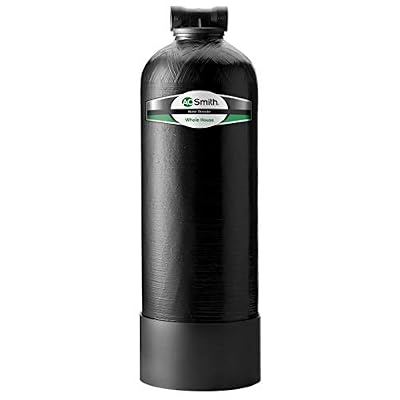
#1. A. O. Smith AO-WH-DSCLR: Simple scale-control format
A. O. Smith AO-WH-DSCLRA. O. Smith AO-WH-DSCLR
Our verdict:
Simple scale-control format
A scale-control task where ion-exchange hardness removal is not the required result.
View on Amazon- Salt-free scale-control unit
- No regeneration salt refill
- Whole-house plumbing format
Keep in mind: The maker states that it does not soften water or remove hardness minerals.
AO-WH-DSCLR is the simple scale-control choice here. The maker separates this duty from softening and hardness-mineral removal. That distinction should decide whether it belongs on your shortlist. Do not buy it while expecting the same measured result as a salt-based ion-exchange unit.
Check the manual's exact feed limits and flow task. A simple format can remove salt-refill work, but it does not make every source suitable. Leave room to reach the shutoff and connections. If the measured goal is lower hardness in the treated water, choose a different treatment review before going further.
#2. Tier1 900K TAC Conditioner: TAC media layout

Tier1 900K TAC ConditionerTier1 900K TAC Conditioner
Our verdict:
TAC media layout
A documented scale-conditioning task where a TAC format matches the feed conditions.
View on Amazon- Template-assisted crystallization media
- Salt-free upflow format
- No electrical supply required
Keep in mind: TAC scale conditioning does not establish hardness-ion removal; the exact feed limits still apply.
Tier1's larger TAC format is the media-based alternative in this set. TAC means template-assisted crystallization. Treat it as the maker's scale-control method, not as proof that the minerals have been removed from the water. The primary-source description makes that boundary explicit.
Check the exact size and current manual before installing. The large capacity label does not replace the flow and feed-water checks. The benefit is a salt-free upflow arrangement. The limit is the treatment result: it should only be chosen where scale control, rather than a lower hardness test, is the intended task.
#3. Aquasure Serene Lite AS-SF800: Conditioner with prefilter

Aquasure Serene Lite AS-SF800Aquasure Serene Lite AS-SF800
Our verdict:
Conditioner with prefilter
A conditioning plan that also calls for the exact included prefilter duty.
View on Amazon- Salt-free conditioner format
- Sediment/carbon/zinc prefilter
- AS-SF800 package configuration
Keep in mind: The prefilter has a separate service task; a conditioner-media claim does not describe every bundled element.
Serene Lite AS-SF800 pairs its scale control format with a prefilter. That makes the package different from choosing a conditioner tank alone. Decide whether the included filter duty is needed, and check its exact element code. A bundle is useful only if each part has a job in the water plan.
Keep prefilter service separate from conditioner-media care. The same time or volume claim should not be applied to both by assumption. Its benefit is the combined package when both duties fit. The trade-off is another element to reach and replace, alongside all the source-water limits that still govern the unit.
How We Picked These Salt-Free Choices
We checked the exact listing records and the makers' current US data. This is a published-data review. We have not installed the units or measured scale in a home. We chose distinct unit formats and kept their claimed duty narrow. None is presented as an ion-exchange softener, and no single result is promised for every feed water.
Factors to consider for a salt free water softener
Decide whether you need hardness removal
The phrase salt free water softener often describes a conditioner or scale-control system. It can confuse two different tasks. Ion-exchange softening removes hardness ions through a resin process. A salt-free scale claim does not prove that removal. Decide which result you need before you compare tanks or capacity labels.
Use a measured hardness result. Do not buy from the appearance of a kettle alone. White marks can prompt a closer look, but a photograph is not a hardness test. Keep the units with the result so the maker can compare them with the exact feed limits. A national hardness map is context, not a test of your tap.
If the goal is reduced hardness in the treated stream, use the conditioner-versus-softener guide. That decision comes before choosing a salt-free format. Do not accept a similar-looking tank as proof that it does the same job. The internal process and stated result are what matter.
Read each scale claim on its own terms
A scale-control claim should say what result was assessed and under which conditions. Do not turn it into a promise that every fixture will stay spotless. Water can still leave residue when it dries. Keep the measured hardness, the scale claim and any household observations in separate parts of your review.
The products here also use different descriptions of their method. Tier1 identifies template-assisted crystallization, often shortened to TAC. Other makers may use different media or terms.
Two salt-free units may use different methods. Each needs its own evidence. Read the exact model's manual and any claim evidence.
If a claim is uncertain, leave it out. You can still compare a documented plumbing layout or service format. You cannot treat an unclear result as established simply because it would make a purchase easier. Ask the maker for the exact test scope instead of filling the gap with a general story about magnets or crystals.
Feed-water limits still apply
You still need to check the source water. Read the exact limits for the measured source. Iron or other feed conditions may call for a separate treatment task before the unit. Use the water test and the exact manual to plan that task. A prefilter does not make every well suitable.
Check any stated limits for flow and water chemistry. A large gallon label does not allow use with every feed. Keep the exact setup in view too. A unit with a separate prefilter has more than one part to assess and maintain. The prefilter's job should not be merged with the unit claim.
For a private well, start with the well-water planning route. A salt-free unit is not a complete microbial, sediment or iron treatment design. You may find it has a place in the plan, but only after those distinct questions are settled. A broad home-system package does not answer them by itself.
Match flow to the house
List the fixtures that may run together. Then compare the service-flow and pressure limits for the exact unit. Household-size wording is only a rough shopping aid. It does not establish what the system will do under your busiest simultaneous use. Use the full manual and the actual water-supply conditions.
Keep connection size separate from useful flow. A large thread on a fitting does not prove that every internal media set has the same pressure loss. Check any bundled prefilter on its own too. The whole installed route has to meet the task, rather than just the biggest tank.
If the available data do not state the basis of a flow claim, ask before choosing. Do not use a larger capacity number to fill that gap. Capacity and rate describe different things. A large stated volume does not settle the flow task. The feed limits must fit too.
Service work is more than adding salt
A salt-free format can remove the repeated salt-refill task. It does not remove every ownership task. Read the manual for media replacement, any prefilter service and steps after non-use. Check access to shutoffs and fittings. A no-backwash description is not permission to ignore the unit indefinitely.
Keep the parts list for the exact package. Aquasure Serene Lite includes a prefilter in the setup checked here. That element has a separate duty and service task. Do not treat a statement about the unit media as a service-life promise for every included filter. Name each part in your record.
Before installing, leave room to perform those jobs. A narrow tank can still be hard to reach behind another appliance. The water-softener installation guide provides a general scope checklist. Use the actual unit manual for allowed connections and service steps rather than copying the regeneration plumbing of a salt-based unit.
Compare the right alternative
If carrying salt is the obstacle, compare the task of maintaining a suitable salt-based softener with the actual result of a salt-free system. Do not change the required outcome silently. Less daily work is useful only if the unit does the job you need. The easier routine and the treatment result must both be understood.
If a drain connection is the obstacle, check which selected unit needs one and why. Keep that installation limit separate from a general dislike of maintenance. A unit without a regeneration drain can be easier to place, but its feed and flow limits still apply. Do not let an easier installation become a claim of equivalent hardness removal.
If the target is taste or a named drinking-water concern, this may be the wrong review entirely. A scale-control system should not be selected as a substitute for a documented filter reduction. Match the treatment duty first. It is reasonable for a house to need a different route, or a simpler plan, than the product category suggested by a search term.
For the wider choice of treatment formats, use the water softener system guide. Match the required result before narrowing the equipment.
Frequently asked questions
Does a salt-free unit remove hardness minerals?
Do not assume that it does. A scale-control claim is different from ion-exchange hardness removal. Check the exact model's method and stated result. If the required outcome is a lower hardness result in treated water, compare that duty explicitly rather than treating every tank marketed as a softener as an equivalent softener.
Will I get no white marks on fixtures?
No such result is promised here. Hardness, drying residue and scale-control claims are different matters. Read the exact test and claim for the chosen unit. A device can be marketed for scale control while minerals remain in the water. Do not use spotless-fixture expectations as a substitute for a measured treatment brief.
Does no salt mean no upkeep at all?
No. Check media replacement and the maintenance of any included prefilter. Shutoffs and connections must remain accessible too. A statement about no salt or backwash describes those particular tasks. It does not cancel the rest of the manual or establish that every cartridge in a bundled system lasts for the same period.
Can a salt-free softener treat any private well?
No universal well-water claim is made. Test the source and match every relevant feed limit. Iron, sediment or a microbial concern may need separate check. A prefilter in the box does not settle those tasks. Choose the treatment sequence first, then decide whether a particular unit has a useful place in it.
Verdict on a salt free water softener
Choose a salt free water softener only after deciding that scale control matches the intended result. Compare AO-WH-DSCLR for its simple scale-control format, Tier1 for its TAC layout and Serene Lite for its prefilter package. Check exact feed limits and service tasks. Do not treat any of these as proven ion-exchange hardness removal.