

The best water softener is the one that meets the measured home load at a written working setting. These three salt-based kits compare a smaller stated grain model with two Fleck-valve kits. We reviewed published data, not equipment tested in our own home. None is a universal choice from home size alone.
#1. Aquasana SimplySoft 40,000: Smaller stated capacity

Aquasana SimplySoft 40,000Aquasana SimplySoft 40,000
Our verdict:
Smaller nominal capacity
A measured household load suited to the exact capacity and flow data.
View on Amazon- Salt-based softener
- 40,000-grain nominal model
Keep in mind: Nominal grains do not establish usable capacity at your salt setting.
SimplySoft 40,000 is the lower stated grain model in this set. It is a salt-based softener, so the review concerns hardness removal through a resin and brine process. Keep it distinct from Aquasana salt-free products. Those lines do not give the same result.
Assess it from the home load and the exact manual. A smaller stated size can fit the task. A larger one can still be wrong.
Ask for the basis of the planned settings. Ask for usable capacity at the planned salt dose. Check feed limits too. Get the needed flow data before choosing.
The trade-off is the repeat brine service and the need to establish those working values. The model number is an identity, not a full sizing calculation. Check the current kit contents, connection route and service space with the installer. Keep any written sizing explanation with the product record.
#2. AFW Fleck 5600SXT 48K: Metered resin kit

AFW Fleck 5600SXT 48KAFW Fleck 5600SXT 48K
Our verdict:
Metered resin package
Buyers who want a documented package built around this controller.
View on Amazon- Fleck 5600SXT controller
- 48,000-grain nominal model
- Checked kit uses 10% crosslink resin
Keep in mind: Verify the seller's complete kit; the valve name alone is insufficient.
This AFW kit combines a Fleck 5600SXT valve with the named stated-capacity resin setup. The maker's current listing identifies the resin version for this kit. Those details help distinguish the kit from another seller's system that uses the same valve name.
Choose it from a written sizing plan. Ask how the measured hardness, treated-water demand and reserve, plus the planned salt dose become the real control settings. Use the valve model to find its manual. Then check the full order. The valve name does not describe every other part.
Its main trade-off is that kit details need careful checking. Confirm the exact resin shipped and the allowed feed and service conditions in writing. Keep the kit list, valve manual and installer settings together.
A quote may name only Fleck. Ask for the rest of the system details. Then compare the full kit with the other picks.
#3. DuraWater Fleck 48K: Alternate complete kit
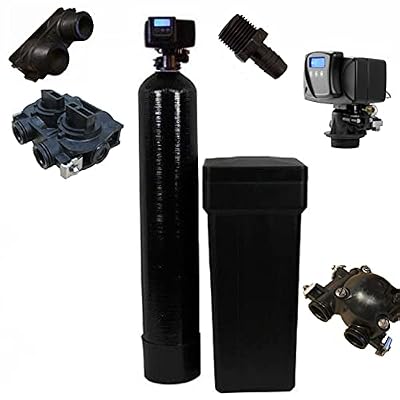
DuraWater Fleck 48KDuraWater Fleck 48K
Our verdict:
Alternate complete package
Buyers comparing a second seller's documented 48K package.
View on Amazon- Fleck 5600SXT controller
- 48,000-grain nominal model
Keep in mind: Match the exact DuraWater kit; do not substitute another specialty model.
DuraWater's 48K kit is a second supplier option around the same valve family. It remains a distinct purchase from the AFW kit. Check the shipped resin and tanks. Compare the connectors and bypass too. A shared valve name does not make every part the same.
This is useful when comparing two full written plans on the same measured home task. The stated grain figure offers a starting identifier. It does not show usable capacity. The sellers may use different salt doses or reserves. Their service intervals can also differ.
The limit is the need for an exact kit review. DuraWater also sells other treatment kits, so keep the model and chosen option clear. Do not import a feature from a specialty iron model into this standard softener review. Compare the current manuals, kit contents and service support before choosing between the similar valve-based options.
How We Picked the Best Water Softener Candidates
We compared the exact system records with the makers' US data and manuals. This is a review of published data. We have not fitted these units or tested their treated water. The review focuses on salt-based ion exchange, usable capacity and the work needed to keep the system running. Salt-free scale conditioners are a separate choice.
The grain label names the model size. It does not promise the same usable capacity at every salt setting. Check that basis on its own.
Each unit must suit the measured source, service flow and fitting location. We did not turn customer ratings into product scores. One valve name also does not prove a full system certificate. Each claim needs its own scope. The real resin and tank, plus control setup all matter.
Factors to consider when choosing the best water softener
Define the hardness-removal task
The best water softener is one that fits a measured hardness-removal duty. A salt-based ion-exchange unit uses resin that must be regenerated with brine. That is a different process from filtering particles or making a scale-control claim. Decide that this is the result you need before comparing system labels, outside sizes or the price of a kit.
Start with a hardness result for the source the unit will treat. Keep the units and sample point with the result. A sample taken after an existing softener cannot describe the raw-water load on a new one. A result from another property is not a substitute. The USGS hardness explainer provides context for the terminology.
Record other measured concerns on its own. Sediment or iron may change the treatment plan, but they should not be assumed from a hardness number alone. A unit named for softening does not answer every question on a well-water test. Keep each needed duty clear so the final kit has a reason for every stage it contains.
Do not size from the number of people alone
Home-size wording can help you begin shopping. It cannot tell you the real water volume and hardness load. Two homes with the same number of residents can use water differently. Use observed treated-water demand where possible. Keep any planning estimate labeled so it is not later mistaken for a measured fact.
Decide which branches will be softened. An irrigation line left on raw water is a different load from a supply that sends all outdoor use through the resin. Map that route before calculating. The unit can only treat water that passes through it, and the sizing task should count the water planned to use that route.
The softener sizing worksheet helps keep hardness and demand inputs visible. It gives a screening load from those inputs. The exact system's usable capacity, salt dose and reserve still need to be matched to the chosen unit. Do not treat a calculated daily load as a full settings instruction.
Keep daily load and usable capacity separate
Daily hardness load comes from the water volume and hardness at the treatment point. Usable capacity describes the resin's working duty. It belongs to a stated salt dose and set of conditions.
Keep those with the grain amount. They are related, but they are not the same figure. You need both to assess a recharge plan.
A large stated grain number is not a fixed supply of usable capacity under every setting. Ask for the rated capacity at the salt dose you intend to use. Keep the full model and resin quantity with that figure. Do not borrow capacity from a larger unit because it has the same control head or a similar tank color.
Reserve is another distinct part of the plan. A system needs a suitable allowance while it schedules the next recharge. Use the exact manual's method.
Do not guess a reserve and subtract it from the headline capacity. That does not give a sound setup for every house. Check the exact resin data. The water load and control method have to fit together.
Understand the salt-dose trade-off
Salt dose and usable capacity should be compared as a pair. A higher stated capacity may use a different salt dose. Check the dose for the working point you plan to use.
Compare both kits on that basis. Ask for both figures on the same basis. Without that pair, a stated grain label is a weak way to compare the real ongoing job.
Do not choose settings from a generic online video. A shared valve family does not mean every seller fits the same resin quantity, tank size or internal parts. Use the assembled system's manuals and the valve guide that apply to it. Record the real settings once the correct basis has been established.
The useful outcome is a clear service routine, not a claim that salt can be avoided entirely in an ion-exchange unit. Compare the needed salt, recharge water and expected interval from the proper capacity data. If those inputs are not known, keep the ongoing total open. Do not turn a marketing efficiency claim into a home saving without the underlying numbers.
Metered control does not remove the setup task
A metered unit schedules recharge from its configured test result and rules. That can be useful when demand varies. It still needs correct inputs for the installed system and source. A digital screen does not know an unmeasured hardness result by itself. Check how the exact control handles hardness and reserve, plus the allowed recharge schedule.
Read the manual before comparing menu features. The useful question is whether you can enter and verify, plus retain the correct settings. A larger display or more menu options is not a treatment result.
Resolve an unclear setting for the chosen resin setup. Do not copy a number from another owner's unit. The two units may have different needs.
Keep a short record of the final values and their basis. Include the measured source and any change made later. If the feed water changes, the original settings may need review under the manual's rules. Good records make that review possible. They prevent a familiar-looking screen from becoming an assumption that the system is still configured correctly.
Check service flow independently of grain capacity
List the fixtures likely to run together. The system needs to meet that service-flow task within its written limits. A large resin capacity does not by itself establish suitable flow for every house. Connection size, resin bed and the full assembled layout can matter. Use the data for the exact system, rather than a bare valve's maximum headline.
Read any pressure-loss basis with the flow claim. A peak figure can describe a different duty from a normal service rating. Keep those labels intact in the review. Do not select the largest number and discard the conditions that explain it. If two product pages use different bases, ask for aligned data before ranking them.
For a well, include what the pump and pressure cycle can provide. A softener does not repair an unrelated supply problem. It also needs the feed conditions specified for its own operation and recharge. The source and supply, plus equipment duty should make sense as one plan. A large grain label cannot fill in missing flow data.
Read iron and manganese limits carefully
If those substances are measured, use the exact system's feed limits. Do not assume every resin softener can take any iron loading because a seller mentions iron in a headline. A dedicated pretreatment task may be needed. The decision should follow the measured water and the chosen unit's guide, not a broad brand claim.
Keep different forms and conditions of the source water in the discussion. A single result without the sampling context may not answer every treatment question. Use the needed tests and the current manual. Do not treat a generic label such as well compatible as a full check of the supply.
The well-water softener guide keeps hardness treatment within a wider well plan. A softener can have a place in that sequence while leaving other duties open. Do not infer disinfection or a full drinking-water result from the presence of a salt tank and control head.
Separate the resin assembly from the valve brand
A Fleck valve is one named part of a full system. Different sellers can pair that valve family with different resin and tank, plus brine arrangements. Compare the assembled model that is actually sold. The valve name alone does not establish resin capacity, treatment limits or a full certificate for the kit.
Write down the seller's system code and the resin specification where written. Keep the tank and brine-tank details too. This makes a review between two similar-looking assemblies more useful. You can then name which facts are shared at the valve level and which belong to the rest of the unit.
If the descriptions conflict, ask the assembler before buying. Do not combine one seller's resin claim with another seller's capacity table. A plausible-looking specification assembled from several pages can describe equipment that nobody supplies. Use one coherent set of documents for the exact kit, with clear evidence for each fact you rely on.
Measure the whole installation
Allow for both the resin tank and brine storage. Mark the pipe connections, service clearance and space needed to add salt. A unit may fit against the wall while leaving no useful way to open the salt lid. Compare the repeated service movement, not just the packed sizes or a photograph of the tanks.
Keep the bypass and shutoffs reachable. Do not put them behind fixed shelving or heavy stored items. A good location should work when the utility space is back in normal use. The installed equipment is not the only object that needs room. The person doing routine service needs a usable position as well.
Read the location limits for the exact model. Follow the specified needs for temperature and support, plus protection of the unit. Do not assume that an outdoor or cramped garage location is allowed because the tanks look robust. The current manual governs the allowed setting and the parts needed for a proper fitting.
Plan the drain and overflow as separate connections
Recharge needs the drain arrangement specified for the system. A brine-tank overflow has a different purpose. Do not assume one tube can replace both jobs. Read the exact routing and air-gap needs before fitting. Keep local plumbing rules in view as well as the equipment guide.
Include those tasks in the setup scope. A nearby floor drain does not prove that every needed connection is already available or suitable. Check route and access, plus the allowed arrangement for the chosen unit.
Resolve a difficult site before the tanks arrive. Do not improvise a drain just because the unit is in place. Plan that route with the installer.
The softener setup guide helps list those work items. It is a planning aid. The assembled system manual owns the real connection procedure.
Use the exact unit's settings and drain guide. Do not copy them from a different size or valve. A shared whole-house label does not settle that match.
Make salt handling realistic
Decide where salt will be stored and how it reaches the brine tank. Carrying a bag through a narrow doorway or lifting it over stored equipment can be a repeat obstacle. Include that route in the location check. A suitable water-treatment result does not by itself make the service job easy to perform.
Read which salt forms and types the exact manual permits. A familiar brand name does not mean every product from that brand is a match for each other. Keep additives or alternative salts within the system's guide.
Use the salt guide to compare the refill forms. Keep salt checks in the wider service record. The exact manual sets the allowed type.
Do not infer correct brine operation from seeing salt in the tank. Follow the manual's inspection and troubleshooting procedure if operation changes. Avoid unapproved settings or improvised chemical additions. Record what was actually checked and changed. A short, accurate service record is more useful than repeated guesses based on the view under the lid.
Read a system certificate as a defined scope
Use the NSF treatment-standards guide to separate the kinds of claims. Then check the exact model in the current listing. A materials statement, a control-valve identity and a full-system performance claim answer different questions. Do not merge them into one general endorsement of every kit built with a familiar component.
Where a performance sheet gives a rated capacity or flow, retain its conditions. The claim belongs to the written setup and duty. It should not be stretched to a different resin quantity or seller assembly without matching evidence. If a full-system claim cannot be verified, leave it out. You can still compare written parts and working data without inventing a certificate.
Check a quoted kit before comparing prices
Ask what the chosen kit actually contains. A bypass, connectors and a brine tank may be included in one offer and chosen on its own in another. A photo does not establish the shipped contents. Keep the current parts list with the quote so a lower price is not simply a less full set.
Compare the resin kit too. An advertised resin type or quantity must refer to the unit being sold, not a larger upgrade on a nearby page. Keep option choices visible.
A tank color may be just a finish choice. A connector may be just a fitting option. Neither should be counted as a separate treatment system. The useful difference is the assembled setup and its written duty.
Review the result after a real change in use
If a treated branch is added, the original demand basis may change. The same is true if the source hardness changes or the home water routine is permanently different. Record the new fact, then review the setup under the manual's method. Do not assume the correct response is always a larger stated grain label.
Keep observations distinct from conclusions. An unexpected recharge pattern is an observation to check. It is not by itself proof that the resin is exhausted or that the valve has failed.
Use the unit's allowed checks in a clear sequence, and record the action actually taken. That gives the next service decision an evidence base rather than another guess.
Resolve differences between two installer plans
Two quotes can name the same stated capacity while describing different working plans. Put the exact model and resin, plus chosen options side by side. Then ask each supplier for the usable capacity at the planned salt dose, the reserve approach and the recharge trigger. A price difference may buy a different kit, or it may reflect a different scope of work. Make that visible before treating either quote as the better value.
Use the same source-water input in both discussions. A different hardness value or treated-water demand can explain different settings. If one supplier adds an allowance for another measured substance, ask which manual or resin data supports it. Do not average two unexplained values and program the result. Resolve the assumptions with the needed supplier and installer.
Compare drain and connection work as well. One quote may cover a bypass and pipe changes. It may include startup checks too.
The other may cover only equipment delivery. Ask who provides each task and what record will be left at handover. The point is a clear installed review, rather than a list of boxes that happen to share a valve name.
Write a simple handover record
Keep the exact model and kit list with the setup date and the source-water result used for sizing. Add the valve settings, allowed salt form and the installer's explanation of the chosen working basis. Store the current manuals with that record. It should be possible to name the resin system without guessing from the color of the tank or a partial valve label.
Record the checks performed at commissioning and what the installer accepted as correct operation. Ask how to recognize a change that needs review and whom to contact. Do not add an improvised test target simply because another model's guide uses it. The real system's guide and the planned treatment result define the useful checks.
When a setting or component changes, date the record. Include the reason and who made the change. This gives a service person a starting point when a home grows, a source changes or a part needs replacement. A full bag of salt and a lit display do not tell that history. A short, exact record does.
Compare cabinet and separate-tank formats
A cabinet format and a separate brine tank can ask for different service space. Look at how the salt lid opens and where the control sits. A compact outside shape may be useful, but it must still allow the tasks in the manual. Compare the installed service footprint rather than choosing from the narrowest product photo.
A separate brine tank can give more freedom in placement within the allowed arrangement. It also adds another object and connection to the room. Keep those facts together. Do not treat a larger tank as useful unless the salt-storage and service plan actually call for it. Size should follow the task rather than become a feature score on its own.
If access is the deciding issue, make a full-scale layout before ordering. Mark where the person stands during a salt refill or control check. Include the drain route and power supply where needed. This is a simple way to expose a poor location without pretending that the outside sizes tell the whole setup story.
Compare costs with the same usable duty
Separate the equipment kit from fitting work. Then list the correct salt and service parts. A base-unit price cannot tell you the full cost where pipes, drains or a bypass need work. Keep unknown items visible in your own review. Missing data should not be entered as zero just to create a neat total.
For ongoing use, compare capacity and salt dose on a consistent basis. A larger stated grain label may look economical while describing a different working point. Do not infer annual savings without the real demand and hardness, plus suitable capacity data. The softener cost guide separates those categories so quotes can be read more clearly.
An extra-filter bundle is also a different purchase from a bare softener. Name what each added stage is supposed to do. A useful prefilter belongs in the water plan, but it should not hide an unclear softening specification. Compare the needed kit and service work, rather than awarding the largest bundle a general advantage.
An existing unit may need service rather than replacement
Name the installed system before shopping for a replacement. Record the full valve and assembled-system code where available. Then describe the real problem. A service reminder, an unsuitable setting and a change in source conditions are different issues. A new tank kit will not necessarily address the original cause.
Use the current unit's allowed checks and troubleshooting sequence. Do not alter several settings at once without a basis. That makes it harder to understand what affected the result. Keep a record of the observed condition and any allowed correction. If replacement is the suitable response, those records can still help define the new task.
The softener maintenance guide helps organize ongoing care. The exact manual sets the real process. A general checklist can remind you which records to keep, but it cannot supply universal settings values. Keep those functions separate when deciding whether an old unit needs service or a different system.
Compare a conditioner only when the goal is different
A salt-free conditioner can be an alternative for a scale-control objective. It is not an equivalent substitute for ion-exchange mineral removal by default. If you change to that format, change the treatment brief explicitly. Do not keep promising the same measured hardness outcome while silently choosing a different process.
The conditioner-versus-softener guide explains the distinction. A dislike of carrying salt is a real ownership concern, but it does not establish which treatment result the house needs. Compare the easier routine and the real result together. Either one can make an otherwise attractive product unsuitable.
Keep other treatment duties separate too. A conditioner combined with carbon is not by itself a full well treatment plan. A softener combined with a drinking-water RO unit still needs each stage to suit its feed.
A kit should make the treatment order clear. A long list of stages does not prove a full solution. Name the duty of each stage.
One household, several demand patterns
Think about regular use and the busy periods. Guests, a changed laundry routine or outdoor use through the treated line can change demand. Record those situations as part of the sizing task. Do not use a generic resident count to hide a known peak in the water actually routed through the system.
A metered valve may help schedule recharge around variable use, within its setup and limits. It still needs a suitable capacity basis. Check how reserve and any override work on the exact unit.
A daily average can hide the peak load. Check the pattern of use. The plan needs to handle that pattern as well as the average.
If use changes permanently, review the inputs and settings under the manual's method. Retain the previous basis so the reason for the update is clear. There is no need to buy larger equipment by itself every time the routine changes. First establish whether the current unit and its allowed setup can still meet the defined task.
Water at a second home
For a property used intermittently, read the system's non-use and restart guide. Low use does not remove time-based service or care needs. Keep the model manual with the property record so the person returning can follow the real procedure. Do not assume a setting suitable during regular occupancy is the only consideration.
Decide who will check salt and the system state between visits if that is part of the plan. A large brine tank does not replace that responsibility. The physical presence of equipment also does not establish that water is passing through it. Include the correct bypass and control state in the record after service or a period away.
If several people share the property, make the service record easy to understand. It should name the part and action, plus date. Avoid an ambiguous note such as checked the softener.
Leave enough data for the next person to name the unit. Record the tasks done. A full-looking salt tank cannot supply that record.
Warranty and seller identity
Read the current warranty for the exact assembled system. A valve maker's terms and an assembler's kit terms can cover different things. Do not assume one headline applies to every resin or tank, or fitting. Check whether registration or proof of setup is needed, and keep the receipt with the real model code.
Where the kit uses a familiar control family, name who supplies the full unit and service parts. That seller relationship can matter when a resin or tank question arises. A component logo does not answer every warranty question. Read the real terms rather than inferring them from the name printed on the control cover.
We do not rank these systems by warranty length alone. It is one part of ownership after source suitability and service access are understood. A longer term does not fix an unsuitable feed or poor drain location. If a needed term is unclear, resolve it before buying instead of assuming the most favorable reading.
Retain the exact documentation
Keep the current system manual and any capacity table that applies to the chosen resin setup. Add the valve guide where needed. A folder full of similar models is less useful than a small, coherent set for the equipment actually fitted. Make the model identity clear on your own record.
Record the final hardness input, capacity basis and other settings with their source. Keep a date for later changes. This makes future review easier if the water supply or home use changes. It also keeps the original basis clear. You then have less reason to copy a guessed setting from an unrelated video.
The same record helps when obtaining replacement parts. A valve family can contain different setups, and resin kits can vary. Match the real part code and allowed arrangement. Do not assume that a visually similar control or a stated grain label fully identifies the system you own.
For the wider choice of treatment formats, use the water softener system guide. Match the required result before narrowing the equipment.
Frequently asked questions
Is the highest grain label the best water softener?
No. Compare usable capacity at the stated salt dose, not just the stated label. Then check service flow and the measured source water. A larger label does not establish the right reserve, drain arrangement or feed limits. The suitable unit is the one whose full written working basis fits the real softening task.
Does a metered valve choose every setting by itself?
No. It operates from the configured test result and rules for the installed system. The exact hardness input, capacity basis and reserve still need to be correct. Use the assembled system's manual and the applicable valve guide. Do not copy settings from another kit simply because the control screen or valve family looks familiar.
Can one softener remove every well-water concern?
No universal well-treatment result is claimed. Start with a water test and the exact unit's feed limits. Iron, sediment or microbial concerns may need separate check or treatment. Keep hardness removal in its defined place within the sequence. A kit name does not establish that every needed duty is covered by the resin tank.
Is a salt-free conditioner the same result without salt bags?
Not by assumption. Scale conditioning and ion-exchange hardness removal are different tasks. Decide which measured result is needed, then compare the suitable process. Avoid changing the equipment format while continuing to promise an unchanged hardness outcome. A simpler upkeep routine only helps when the real treatment result also matches the home's goal.
Can I buy from household size alone?
Use that label only to begin the search. Real treated-water demand and measured hardness define the load more clearly. The exact unit's usable capacity and flow, plus recharge needs still need checking. Include any branches that will be softened and the way demand varies, rather than assuming every home with the same resident count is equivalent.
Verdict on the best water softener
Choose the best water softener from measured hardness and the planned treated-water demand. Compare the exact assembled systems, usable capacity and service flow. Then check the salt and drain, plus access tasks. A stated grain label or familiar valve name is a starting point. The full written setup must fit the house you actually plan to treat.